Asset management
Where every unit is, and what it has cost
Most fleets are tracked well enough to say where something is, and not well enough to say what it has cost, when it is due back, or whether it is fit to ship today.
How it works
Every movement, on one record
- In stock Each serialised unit, with the revision it was built to.DocCore
- Reserved Against a job.
- Dispatched On a delivery note that carries its certificates.
- Back in the workshop Work orders with parts, labour and checklists.
- Ready again Or retired, with what it cost to keep.
What it tracks
Every serialised unit
Location, state, and a history: what was done to it, when, by whom, and what it cost.
Work orders with costs
Parts, labour and checklists on the order.
Rentals
Reservation against a job, picking, delivery notes that carry the unit's certificates, and utilisation.
Consumables
Held with a minimum level.
On screen
The register
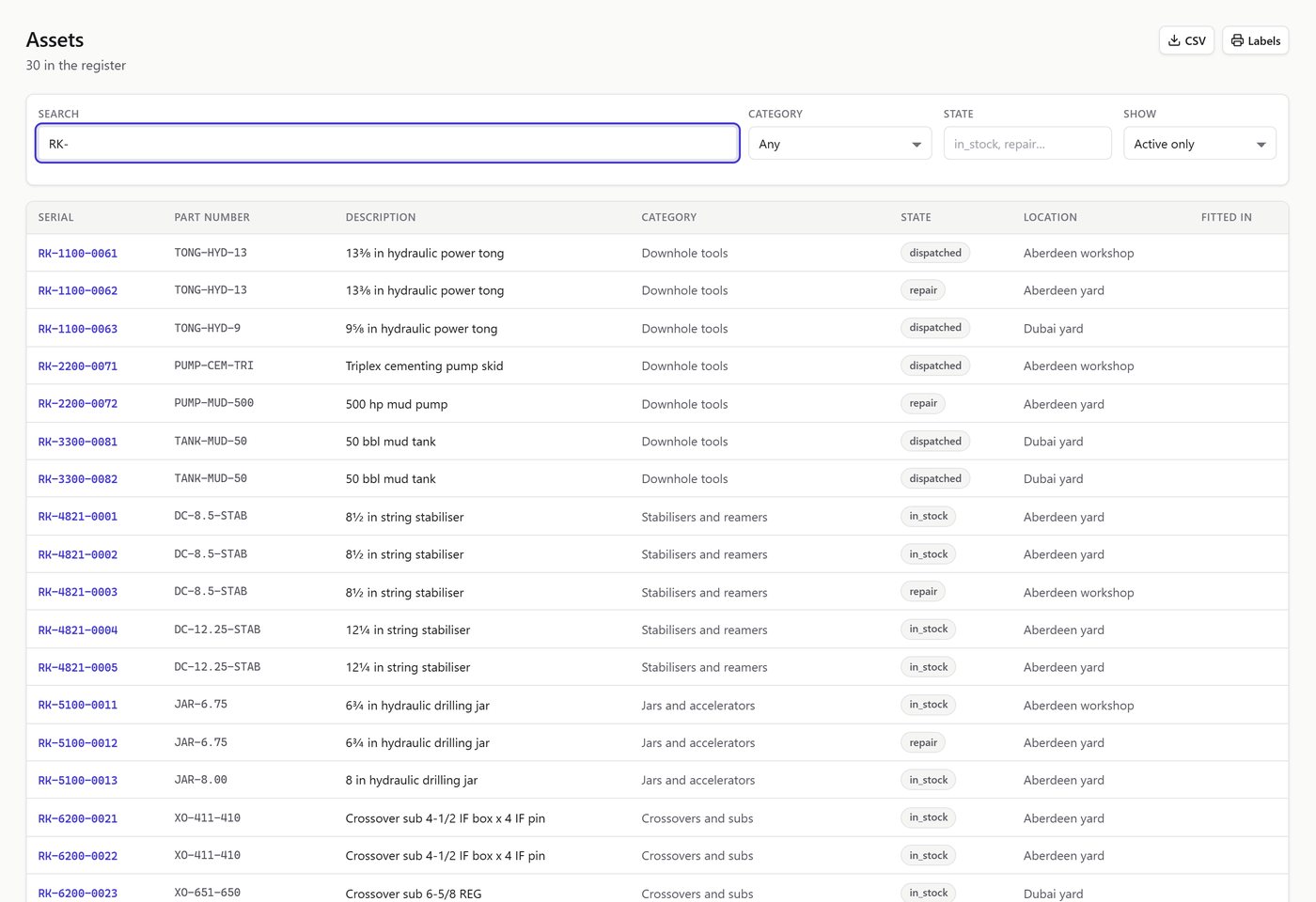
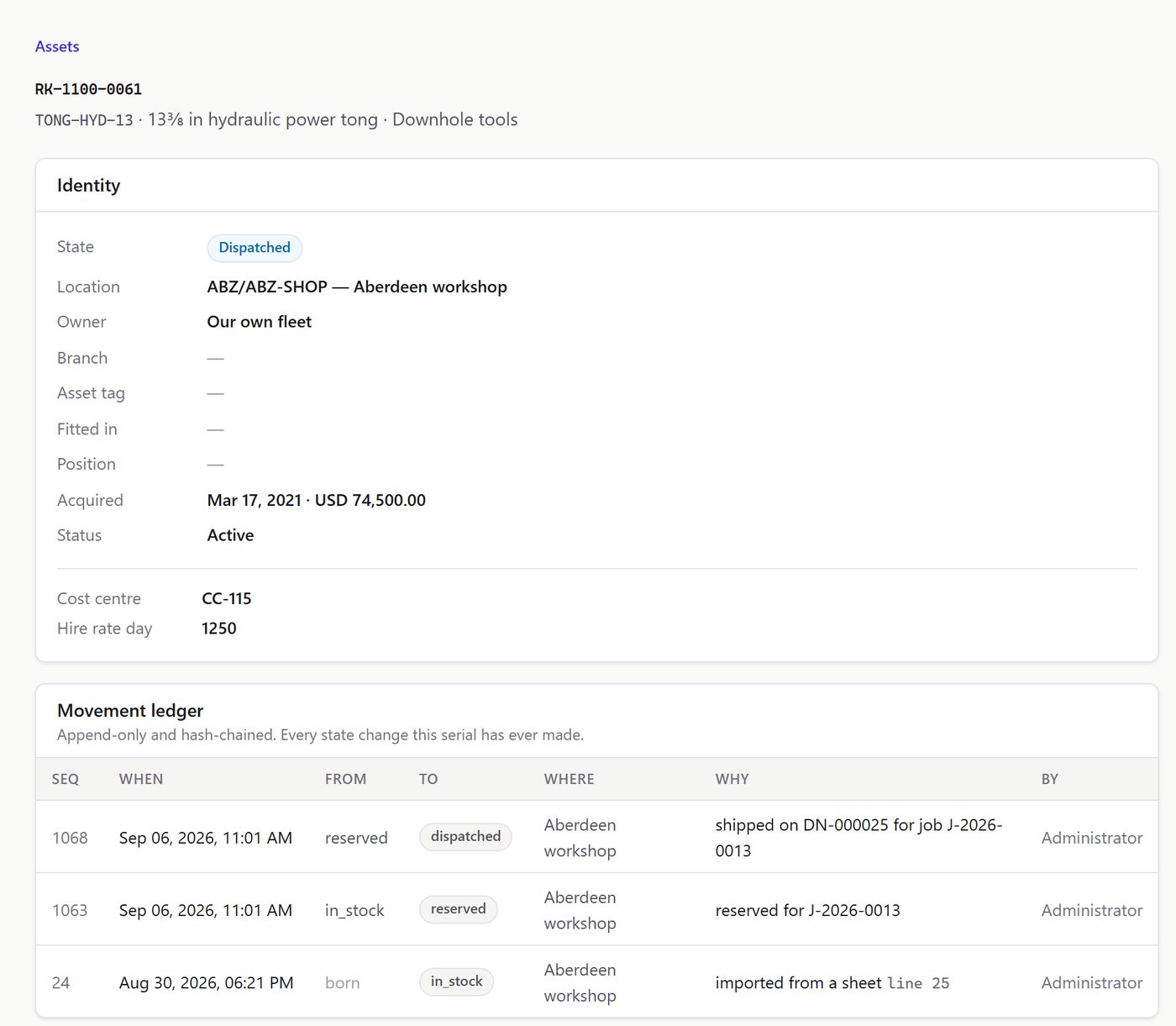
One unit, and everything that has happened to it
Controls
What makes the record hold
- A movement ledger you can verify. Every movement is chained to the one before it, and one command verifies the whole chain. A record altered afterwards breaks the chain.
- Certificates with expiry. A unit with a lapsed certificate is not shippable, and the system knows before the delivery note is raised.
- Preventive maintenance. Scheduled on running hours, cycles, or the calendar.
- Condition data from the floor. Readings from an edge device can be bound to an asset, so condition data from a machine attaches to that unit's record.
- A QR label. The label on the unit opens its record on a phone.
In your industry
What the fleet is, industry by industry
Oil and gasDrill bits and downhole tools
- The fleet. Bits, motors, jars and stabilisers, each by serial number, with its certificates and where it is now.
- On hire. Reserved against a job, shipped on a delivery note with its certificates, and its rental days billed when it comes back.
- Back in the workshop. Received, inspected, repaired or retired, with every hour and part on the work order.
ContractorsTools, plant and test instruments
- The fleet. Power tools, generators, access equipment and test instruments, and which site each one is on.
- In calibration. Calibration due dates on every instrument, so an overdue one is found before it is used.
- Kept running. Maintenance on running hours or the calendar, and the repair cost of each item.
Plants and factoriesMachines, inverters and test equipment
- The fleet. Production machines, test equipment, or the inverters and trackers of a solar plant, each with its own record.
- Condition from the machine. Running hours and condition readings from Edge IIoT, so maintenance follows what the machine actually did.
- The cost of keeping it. Every work order, part and hour, against the unit.
Connections
Where its records come from, and where they go
- From DocCore. The released drawing and part numbers the unit was built to.
- From QCore. The certificates and inspection evidence, attached to the same serial number.
- From Edge IIoT. Running hours and condition readings from the machine itself.
- To your customers. With PortalCore, a customer sees their own equipment on hire, due-back dates and certificates.
- To RAKNexus. Customers, orders and projects are linked to equipment, rental days are billed as invoice lines, and repair costs are in view.
Note
Scope
AssetCore tracks your fleet. The register and the unit shown on this page are dummy sample data.
Next
The manual
The AssetCore manual covers installation, day-to-day use and administration. Access is granted on request.
RAK Engineering · rakengine.com/suite/assetcore/ · support@rakengine.com